April 25, 2026

finance

The bitcoin value chart serves as a crucial tool for anyone looking to navigate the world of cryptocurrency. It not only reflects the historical performance of Bitcoin but also provides insights into its current market dynamics. By understanding this chart, investors can make informed decisions based on price fluctuations, trading volume, and various other metrics that influence Bitcoin’s value.

From line graphs to candlestick displays, each type of chart offers a unique perspective on Bitcoin’s market behavior, allowing traders to interpret trends and anticipate future movements. With a decade’s worth of price data and the impact of key events, exploring the bitcoin value chart can be both enlightening and strategic for anyone interested in this digital currency.

Understanding Bitcoin Value Chart

A Bitcoin value chart serves as a visual representation of Bitcoin’s price movements over time, providing critical insights for traders and investors in the cryptocurrency market. By analyzing these charts, participants can make informed decisions based on historical trends, market sentiment, and price volatility.The significance of a Bitcoin value chart in cryptocurrency trading cannot be overstated. It helps traders identify patterns, gauge market momentum, and implement effective trading strategies.

By examining this chart, one can observe how Bitcoin’s price fluctuates in response to market events, regulatory changes, and investor sentiment.

Key Components of Bitcoin Value Chart

Several key components make up a Bitcoin value chart, each contributing to a comprehensive understanding of the market dynamics. These components include:

  • Price: The price of Bitcoin is the most fundamental aspect illustrated on the chart, reflecting its market value at any given time. It is often displayed on the vertical axis.
  • Volume: Trading volume indicates the total amount of Bitcoin that has been traded within a specific timeframe. It is a vital indicator of market activity and liquidity, generally represented by bars beneath the price chart.
  • Time: The horizontal axis typically represents time, which can be adjusted to display various intervals such as minutes, hours, days, or even weeks. This aspect allows traders to observe both short-term and long-term trends.

Types of Bitcoin Value Charts

Different types of Bitcoin value charts serve various analytical purposes, allowing traders to choose the most suitable option based on their strategies. The most common types include:

  • Line Charts: These charts display Bitcoin’s closing prices over a defined period, connecting the dots to create a simple and clear visual trend. They are beneficial for observing overall price direction without the clutter of additional data.
  • Candlestick Charts: Candlestick charts provide detailed information about price movements within specific time frames, showcasing the open, high, low, and close prices. Each candlestick represents a time period, with bullish (green) and bearish (red) indicators, allowing traders to assess market sentiment effectively.
  • Bar Charts: Similar to candlestick charts, bar charts provide the same price data but use vertical bars to represent the open, high, low, and close prices. While less visually intuitive than candlesticks, they still offer valuable insights into price dynamics.

“Understanding the various components and types of Bitcoin value charts is essential for making informed trading decisions in the ever-volatile cryptocurrency market.”

Historical Trends of Bitcoin Value

The value of Bitcoin has seen remarkable fluctuations over the past decade, driven by a variety of factors including market demand, regulatory changes, and technological advancements. Understanding these historical trends is crucial for anyone looking to grasp the dynamics of this cryptocurrency.The past ten years have been characterized by significant volatility and rapid growth in Bitcoin’s price. Initially launched in 2009, Bitcoin’s early years were marked by low trading volumes and minimal public awareness.

However, as more users adopted Bitcoin and as its underlying technology gained recognition, its value began to rise dramatically. Major events, such as regulatory announcements, technological upgrades, and macroeconomic factors, have also played critical roles in shaping Bitcoin’s market trajectory.

Significant Price Movements and Influencing Events

Several key events have significantly impacted Bitcoin’s value, leading to notable price movements. A comprehensive understanding of these events offers insight into the cryptocurrency’s market behavior. Below is a timeline showcasing important milestones in Bitcoin’s history along with corresponding value changes.

Year Event Bitcoin Value (Approx.)
2010 First recorded Bitcoin transaction for real-world goods (10,000 BTC for two pizzas) $0.0025
2013 Bitcoin reaches $1,000 for the first time $1,000
2017 Bitcoin’s value surges to nearly $20,000, attracting massive media attention $19,783
2018 Major market correction follows, Bitcoin drops to around $3,200 $3,194
2020 Institutional interest grows; Bitcoin reaches $20,000 again $20,000
2021 Bitcoin hits an all-time high of approximately $64,000 $64,000
2022 Global economic uncertainty leads to another downturn; Bitcoin falls below $20,000 $19,000

Throughout this decade, several other factors have contributed to Bitcoin’s price fluctuations, such as changes in investor sentiment, competitive cryptocurrencies, and broader economic conditions.

“The cryptocurrency market remains highly speculative and influenced by diverse factors that can drastically alter the landscape overnight.”

This timeline and the events associated with it showcase how Bitcoin’s value has been a reflection of both investor behavior and external market influences. By analyzing these trends, one can gain valuable insights into potential future movements of Bitcoin’s value.

Factors Affecting Bitcoin Value

Bitcoin’s value is influenced by a myriad of factors, both internal and external. Understanding these elements is crucial for anyone looking to navigate the volatile landscape of cryptocurrency investing. This section delves into the key factors that shape Bitcoin’s price, from market dynamics to psychological influences.

External Influences on Bitcoin Value

Several external factors significantly impact Bitcoin’s market value. These include market demand, regulatory developments, and technological advancements.

Market Demand

The demand for Bitcoin directly correlates with its price. When more people want to buy Bitcoin than sell it, the price tends to rise. Conversely, if more individuals wish to sell, the price can drop. Events that trigger increased demand can include mainstream adoption by businesses, media coverage, and the introduction of Bitcoin-related financial products.

Regulation

Government policies and regulations can have profound effects on Bitcoin’s value. Positive regulatory frameworks tend to boost confidence and market participation, while stringent regulations can lead to uncertainty and price drops. For instance, announcements from countries regarding the legality of Bitcoin can cause immediate market reactions.

Technological Advancements

Innovations within the Bitcoin network, such as improvements in scalability and security, can enhance its value. Technologies like the Lightning Network aim to make transactions faster and cheaper, attracting more users and investors.

Investor Sentiment and Market Psychology

Investor sentiment plays a pivotal role in shaping Bitcoin’s price movements. Market psychology often leads to fluctuations based on emotional reactions rather than fundamental value.

FOMO (Fear of Missing Out)

This phenomenon can drive prices higher as investors rush to buy Bitcoin during price surges, fearing they will miss out on potential profits.

Panic Selling

Conversely, negative news or market downturns can trigger panic selling, leading to steep price declines. This reaction is often driven by emotions rather than logical analysis of Bitcoin’s long-term potential.Market sentiment can shift rapidly, and as Bitcoin is still relatively young compared to traditional assets, its price tends to be more susceptible to these emotional swings.

Comparison of Factors Impacting Bitcoin Value Against Traditional Assets

Understanding how Bitcoin’s influencing factors compare to those of traditional asset classes can provide deeper insights into its market behavior. Below is a comparison of some key factors:

Market Demand

*Bitcoin*

Highly influenced by speculative trading and new technological adoption.

*Traditional Assets*

Often driven by company performance, economic indicators, and geopolitical events.

Regulation

*Bitcoin*

Subject to fluctuating regulatory landscapes across different jurisdictions, impacting its global adoption.

*Traditional Assets*

Generally regulated with established frameworks, though regulatory changes can still impact stock and bond markets.

Technological Advancements

*Bitcoin*

Innovations such as blockchain improvements can lead to rapid changes in value.

*Traditional Assets*

Technological changes can impact industries but do not directly alter the asset’s intrinsic value.

Investor Sentiment

*Bitcoin*

High volatility driven by psychological factors can lead to dramatic price swings.

*Traditional Assets*

Sentiment impacts stock markets too, but typically with less volatility due to established market mechanisms.

“Understanding the factors affecting Bitcoin’s value is essential for making informed investment decisions.”

Analyzing Current Bitcoin Value Trends

The analysis of current Bitcoin value trends provides essential insights into the cryptocurrency’s market behavior. Understanding these trends not only helps investors make informed decisions but also sheds light on the overall sentiment within the crypto market. By examining the present conditions as reflected in the Bitcoin value chart, one can identify critical patterns and indicators that influence pricing.The current market conditions for Bitcoin are characterized by a volatile environment influenced by various economic factors, regulatory news, and technological developments.

The Bitcoin value chart serves as a visual representation of these fluctuations, allowing analysts and traders to interpret the relationships between price changes and market events.

Tools and Techniques for Interpreting Bitcoin Value Trends

Several tools and techniques are instrumental in analyzing Bitcoin value trends effectively. Utilizing these methods can enhance understanding and provide a clearer picture of market dynamics. The following are some of the most commonly used techniques:

1. Moving Averages

This technique smooths out price data over a specific period, allowing traders to identify trends more easily. The two primary types are the Simple Moving Average (SMA) and the Exponential Moving Average (EMA).

The SMA calculates the average price over a defined number of periods, while the EMA gives greater weight to more recent prices, making it more responsive to new information.

For instance, a 50-day EMA can serve as support or resistance, indicating potential entry or exit points.

2. Relative Strength Index (RSI)

The RSI is a momentum oscillator that measures the speed and change of price movements. It ranges from 0 to 100 and is typically used to identify overbought or oversold conditions. An RSI above 70 indicates an overbought condition, suggesting a potential price correction, while an RSI below 30 indicates oversold conditions, possibly signaling a price rebound.

3. Candlestick Patterns

Analyzing candlestick patterns can provide insights into market sentiment. Patterns such as Doji, Hammer, and Engulfing can indicate potential reversals or continuations in the trend.

4. Volume Analysis

Examining trading volume is crucial for understanding the strength of a price movement. An increase in volume during a price rise suggests stronger momentum, while low volume during a decrease may indicate a lack of conviction in the downward move.

Step-by-Step Guide to Reading a Bitcoin Value Chart

Reading a Bitcoin value chart effectively requires familiarity with its components and the ability to interpret key indicators. Here’s a step-by-step guide on how to do it:

Step 1

Identify the Time Frame : Select the appropriate time frame for your analysis—be it minutes, hours, days, or weeks. Shorter time frames cater to day traders, while longer periods suit investors focused on trends.

Step 2

Analyze Price Movements : Observe the price movements and identify trends. Look for higher highs and higher lows in an uptrend, and lower highs and lower lows in a downtrend.

Step 3

Apply Moving Averages : Add moving averages to the chart to help smooth out price fluctuations. Look for crossovers between short-term and long-term moving averages, which can indicate bullish or bearish signals.

Step 4

Utilize RSI : Incorporate the RSI to assess whether Bitcoin is in an overbought or oversold state. This can guide entry and exit decisions.

Step 5

Examine Volume : Pay attention to the volume accompanying price movements. High volume on price increases indicates strong buying interest, while high volume on price drops may indicate selling pressure.

Step 6

Look for Patterns : Identify any candlestick patterns that may suggest potential reversals or continuations. Familiarize yourself with common patterns to enhance your predictive capabilities.By utilizing these tools and following this guide, traders and investors can improve their ability to read Bitcoin value charts and make more informed decisions in the ever-evolving cryptocurrency market.

Future Projections for Bitcoin Value
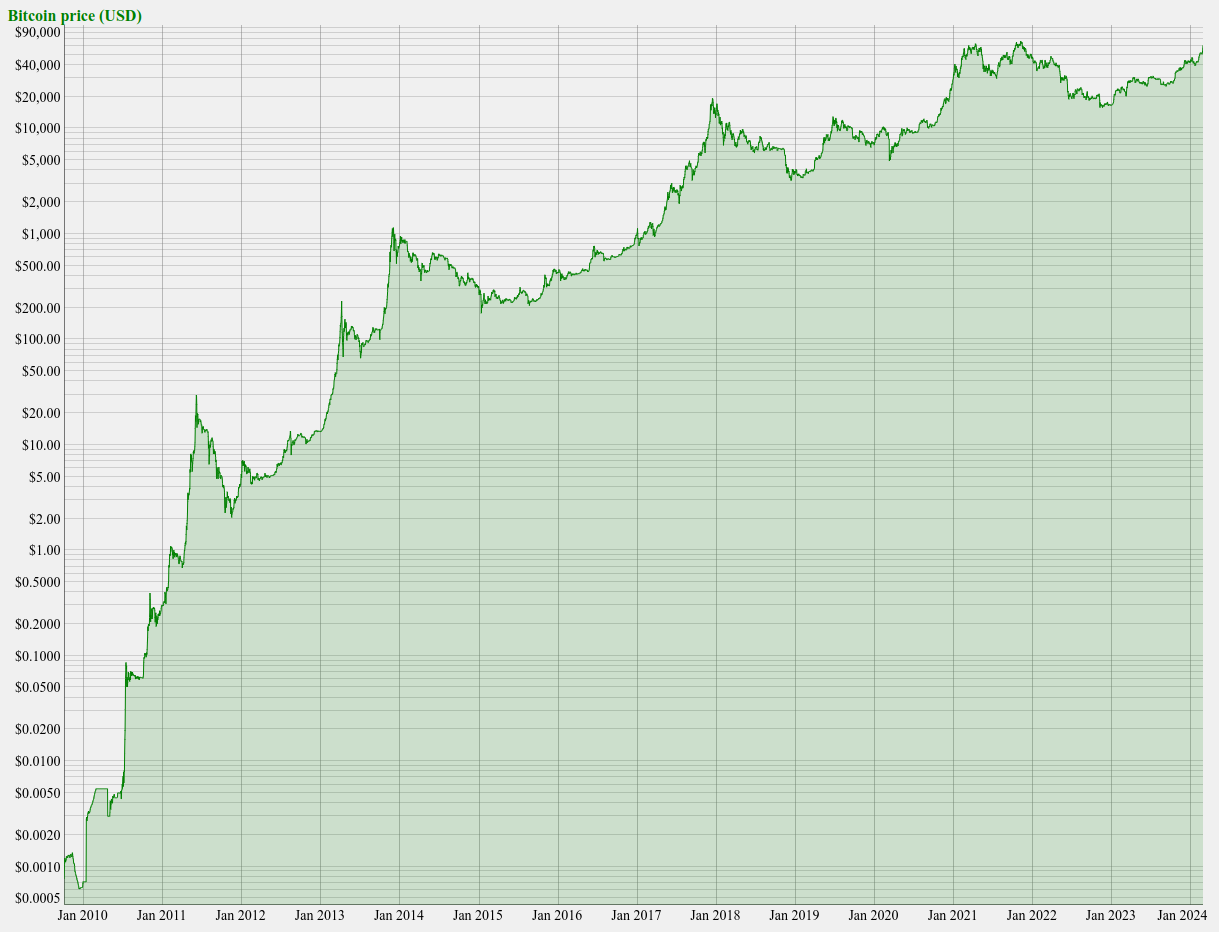
All-time Bitcoin price chart

As the cryptocurrency landscape evolves, forecasting Bitcoin’s future value becomes increasingly complex yet vital for investors and enthusiasts alike. By analyzing historical data and current market trends, various methodologies can be employed to predict where Bitcoin might be heading. This segment explores these methodologies while considering the influence of technological advancements on its value.

Methodologies for Forecasting Bitcoin’s Future Value

Understanding potential future price movements of Bitcoin requires a combination of quantitative and qualitative analysis. Various forecasting methods leverage historical price data along with current market conditions.One prevalent methodology is technical analysis, which involves studying price charts and historical patterns to predict future movements. Traders often use indicators such as Moving Averages, RSI (Relative Strength Index), and Fibonacci retracements to identify entry and exit points.

Another approach is fundamental analysis, which looks at external factors such as market demand, regulatory news, and macroeconomic indicators affecting Bitcoin.Additionally, machine learning algorithms have gained traction in predicting Bitcoin prices by analyzing vast datasets. These algorithms can identify patterns that human analysts may overlook, providing a more dynamic approach to forecasting.

Technological Innovations Impacting Bitcoin Value

Technological advancements play a crucial role in influencing Bitcoin’s value. One significant innovation is the Lightning Network, which aims to enhance Bitcoin’s scalability and transaction speed. This layer-2 solution allows for faster transactions by enabling off-chain processing, facilitating microtransactions that were previously impractical due to high fees and slow confirmation times.The implementation of the Lightning Network can lead to increased adoption of Bitcoin for everyday transactions, which in turn may drive up demand and, consequently, its value.

The ability to conduct instant, low-cost transactions makes Bitcoin more appealing as a medium of exchange, potentially broadening its usage beyond just a store of value.

Hypothetical Future Bitcoin Values Based on Market Conditions

To illustrate potential future Bitcoin values, we can design a hypothetical scenario considering various market conditions. The table below presents potential price projections based on bullish, bearish, and stable market conditions.

Market Condition Projected Bitcoin Value (USD)
Bullish Market (Increased Adoption) $150,000
Stable Market (Current Trends Continue) $50,000
Bearish Market (Regulatory Crackdown) $15,000

This hypothetical scenario demonstrates how varying factors such as market sentiment, regulatory landscapes, and technological advancements could dramatically affect Bitcoin’s future valuation. By understanding these elements, investors can make more informed decisions regarding their cryptocurrency portfolios.

Practical Applications of Bitcoin Value Charts

Understanding and utilizing Bitcoin value charts can be incredibly beneficial for both traders and investors. These charts provide a visual representation of Bitcoin’s price movements, making it easier to identify trends, support and resistance levels, and potential entry or exit points for trades. By leveraging this information effectively, individuals can make more informed decisions regarding their investments in Bitcoin.Bitcoin value charts are not just numbers; they reflect real-time market sentiment and can guide traders in formulating their strategies.

Understanding chart patterns and incorporating various technical indicators can significantly enhance trading outcomes. Traders can spot trends that suggest buying or selling opportunities, while investors might use them to assess long-term potential based on historical performance.

Utilizing Chart Patterns and Technical Indicators

Chart patterns and technical indicators play a crucial role in developing effective trading strategies for Bitcoin. Recognizing these patterns can signal potential price movements, allowing traders to position themselves accordingly. Key patterns to watch include:

  • Head and Shoulders: This pattern often indicates a reversal in trend, signaling a potential sell opportunity after an upward movement.
  • Double Top and Double Bottom: These formations suggest price reversals. A double top signals a potential downturn, while a double bottom indicates a possible upward trend.
  • Triangles: Ascending, descending, and symmetrical triangles can indicate continuation or reversal, depending on the breakout direction.

In addition to chart patterns, technical indicators serve as valuable tools for traders. Some commonly used indicators include:

  • Moving Averages: These smooth out price data to identify trends over a specific period, helping traders determine potential buy or sell signals.
  • Relative Strength Index (RSI): This momentum oscillator measures the speed and change of price movements, indicating overbought or oversold conditions.
  • Bollinger Bands: These bands provide a visual representation of volatility and can help identify potential price breakouts or reversals.

To leverage these tools effectively, it is essential to combine multiple indicators and patterns to confirm trading signals. For instance, if a trader identifies a double bottom pattern alongside an RSI reading indicating oversold conditions, this may strengthen the case for entering a long position.

Resources and Tools for Tracking Bitcoin Value Charts

Access to reliable resources and tools is vital for tracking Bitcoin value charts effectively. A variety of platforms and applications can help traders and investors stay informed about market movements. Useful resources include:

  • TradingView: This platform offers advanced charting tools, community-generated ideas, and a wide range of technical indicators to analyze Bitcoin’s performance.
  • CoinMarketCap: Known for tracking cryptocurrency prices, it provides historical data, market capitalization, and interactive charts for Bitcoin and other cryptocurrencies.
  • CryptoCompare: This resource provides comprehensive market data and analytics tools, including price charts, trading volume, and market sentiment analysis.
  • Binance: As one of the largest cryptocurrency exchanges, Binance offers robust charting features along with trading tools, making it a go-to resource for active traders.

Utilizing these tools effectively allows traders to remain updated on Bitcoin’s value movements and make strategic decisions based on real-time data. Keeping an eye on multiple sources of information and employing effective charting techniques can significantly enhance one’s trading strategy and investment outcomes.

Concluding Remarks

In summary, the bitcoin value chart is more than just a collection of numbers; it is a window into the ever-evolving landscape of cryptocurrency trading. By analyzing historical trends, current market conditions, and future projections, traders can better position themselves in this volatile market. Whether you are a seasoned investor or a newcomer, understanding how to read and utilize the bitcoin value chart can enhance your trading strategies and decision-making process.

Essential FAQs

What is a Bitcoin value chart?

A Bitcoin value chart visually represents the price fluctuations of Bitcoin over time, helping traders analyze trends and make informed decisions.

How do I read a Bitcoin value chart?

To read a Bitcoin value chart, look for key components like price movements, trading volume, and time intervals, and use tools like moving averages for analysis.

What are the different types of Bitcoin value charts?

The main types of Bitcoin value charts include line charts, candlestick charts, and bar charts, each offering a different way to visualize price movements.

Why is understanding the Bitcoin value chart important?

Understanding the Bitcoin value chart is crucial for making informed trading decisions, identifying trends, and assessing market sentiment.

What external factors influence Bitcoin value?

Bitcoin value can be influenced by factors such as market demand, regulatory news, technological advancements, and overall investor sentiment.

Remote work is transforming the financial sector, and financial analyst remote careers are booming. This guide dives deep into the world of remote financial analysis, exploring the diverse opportunities, essential skills, and tools needed to thrive in this dynamic field. From investment banking to corporate finance, we’ll uncover the details of these exciting roles and equip you with the knowledge to build a successful career.

This comprehensive resource provides a roadmap for aspiring remote financial analysts, offering insights into the specific requirements and practical strategies for navigating the remote work landscape. We’ll delve into the technical and soft skills essential for success, the crucial tools and technologies, and the unique challenges and rewards of remote work in finance. The guide also covers crucial aspects like compensation, benefits, and resources for further learning.

Introduction to Remote Financial Analyst Careers

Remote financial analyst roles are rapidly expanding, offering professionals the flexibility to work from anywhere while contributing to the financial world. This shift is driven by technological advancements and a growing recognition of the value of remote work. These positions typically involve tasks similar to traditional in-office roles, but with the added benefit of location independence.The transition to remote work in finance has been gradual but significant.

Early adopters recognized the increased efficiency and reduced overhead associated with remote teams. The COVID-19 pandemic accelerated this trend, forcing many organizations to embrace remote work models. Now, many firms are integrating remote work permanently, signaling a long-term shift in the industry. The future outlook for remote financial analyst roles is positive, with the trend likely to continue, driven by ongoing technological improvements and a desire for a better work-life balance.

Skills and Qualifications for Remote Financial Analysts

A strong foundation in financial analysis is essential. This includes proficiency in financial modeling, data analysis, and financial reporting. Candidates should demonstrate a deep understanding of financial statements, including balance sheets, income statements, and cash flow statements. Strong analytical and problem-solving skills are also crucial. Furthermore, excellent communication and interpersonal skills are essential, as remote analysts often interact with colleagues and clients virtually.

A strong work ethic and ability to manage time effectively are vital, as remote work necessitates self-discipline and autonomy. Proficiency in relevant software, such as Excel, SQL, and financial modeling software, is also highly valued.

Types of Remote Financial Analyst Jobs

The remote financial analyst field encompasses a wide array of specializations. These roles span various sectors and responsibilities, offering diverse career paths.

Job Type Responsibilities
Investment Banking Analyst Conducting financial modeling, valuation analysis, and market research for investment banking transactions; preparing presentations and reports for clients and management.
Corporate Finance Analyst Developing and implementing financial strategies for corporations; preparing budgets, forecasts, and financial reports; providing recommendations for capital investments.
Financial Planning and Analysis (FP&A) Analyst Analyzing financial data to identify trends and opportunities; providing insights to support strategic decision-making; preparing financial forecasts and reports.
Hedge Fund Analyst Analyzing investment opportunities, managing portfolios, and conducting financial research; supporting investment strategies and risk management.

Essential Skills for Remote Financial Analysts

Remote financial analysis is a rapidly growing field, demanding a unique blend of technical expertise and soft skills. Success in this environment hinges on the ability to effectively communicate, collaborate, and interpret data in a virtual setting. This section Artikels the critical skills needed to excel as a remote financial analyst.

Top 5 Technical Skills

Effective remote financial analysis relies heavily on strong technical skills. These skills allow analysts to collect, process, and interpret data accurately and efficiently. Proficiency in these areas is paramount for success in the remote work environment.

  • Spreadsheet proficiency (e.g., Excel): Mastering spreadsheet software is fundamental for data manipulation, analysis, and presentation. Analysts frequently use Excel for tasks like creating financial models, performing calculations, and visualizing data. Advanced features like pivot tables and macros can significantly enhance efficiency and provide detailed insights.
  • Data analysis software (e.g., SQL, Python): Data analysis tools like SQL and Python are essential for extracting, cleaning, and transforming large datasets. SQL is widely used for querying relational databases, while Python offers powerful libraries for statistical analysis, data visualization, and machine learning tasks. The ability to work with these tools allows analysts to uncover hidden patterns and trends in complex financial data.

  • Financial modeling: Building financial models is a cornerstone of financial analysis. These models allow analysts to project future performance, evaluate investment opportunities, and assess risk. Proficiency in building and validating models is crucial for making informed recommendations.
  • Financial reporting: Creating clear and concise financial reports is critical for communicating insights to stakeholders. This includes designing and formatting reports, using data visualization tools to present key findings, and understanding the narrative behind the numbers.
  • Statistical analysis: Understanding statistical concepts like hypothesis testing, regression analysis, and correlation allows analysts to identify meaningful relationships within data, test hypotheses, and make more accurate predictions. It enables deeper insights into market trends and financial performance.

3 Vital Soft Skills

Effective communication and collaboration are paramount for remote financial analysts. Strong soft skills foster positive working relationships and ensure smooth information flow.

  • Communication skills: Clear and concise communication is essential for conveying complex financial information to diverse audiences, including colleagues, clients, and managers. This includes written communication (reports, emails), verbal communication (meetings, presentations), and active listening. The ability to articulate findings effectively and tailor communication to different audiences is crucial for building trust and fostering strong working relationships.
  • Collaboration skills: Remote work necessitates strong collaboration skills. Analysts need to work effectively with colleagues, often located in different time zones, to achieve shared goals. This includes participating in virtual meetings, sharing information promptly, and providing constructive feedback.
  • Problem-solving skills: Financial analysis often involves identifying and resolving complex issues. The ability to approach problems systematically, analyze different scenarios, and develop effective solutions is critical for success. Adaptability and flexibility are key in addressing unexpected situations and adjusting to evolving market conditions.

Data Analysis and Interpretation

Data analysis and interpretation are fundamental to the role of a remote financial analyst. This involves not only the technical skills to analyze data but also the ability to extract meaningful insights from the data and present them in a clear and concise manner.

Effective data analysis and interpretation allow remote financial analysts to understand trends, identify risks, and provide actionable recommendations. This skill enables better decision-making by stakeholders, leading to more effective financial strategies.

Tools and Technologies

Remote financial analysts utilize a variety of tools and technologies to perform their tasks efficiently. These tools streamline workflows and enhance the overall analysis process.

  • Spreadsheet software (Excel, Google Sheets): These tools are widely used for data manipulation, analysis, and visualization.
  • Data visualization tools (Tableau, Power BI): These tools help analysts create interactive dashboards and reports to effectively communicate insights to stakeholders.
  • Cloud-based collaboration platforms (Slack, Microsoft Teams): These platforms facilitate communication and teamwork in a remote environment.
  • Financial modeling software (e.g., Bloomberg Terminal): Specialized software platforms provide advanced functionalities for financial modeling and analysis.

Practical Applications of Technical Skills

Technical Skill Practical Application in Remote Financial Analyst Role
Spreadsheet Proficiency (Excel) Creating financial models, performing calculations, analyzing data, and presenting findings.
Data Analysis Software (SQL, Python) Extracting, cleaning, and transforming data from various sources, performing statistical analysis, and building predictive models.
Financial Modeling Developing projections, assessing investment opportunities, evaluating risk, and supporting decision-making.
Financial Reporting Producing clear and concise reports that summarize key findings and provide actionable insights to stakeholders.
Statistical Analysis Identifying trends, testing hypotheses, and making accurate predictions based on data analysis.

Tools and Technologies for Remote Financial Analysts

Remote financial analysis relies heavily on robust tools and technologies to ensure accurate data processing, efficient reporting, and secure communication. These tools enable analysts to work effectively from various locations, accessing and manipulating data sets while maintaining compliance with industry regulations.The increasing prevalence of remote work necessitates specialized software and platforms that support collaboration, data visualization, and security. Cloud-based solutions are particularly well-suited for remote teams, offering secure data storage, accessibility, and scalability.

Common Software Applications

A wide array of software applications facilitate data analysis and reporting in remote environments. Spreadsheet software like Microsoft Excel and Google Sheets remain essential for basic calculations, data manipulation, and creating simple reports. Advanced analytics tools such as Tableau and Power BI are crucial for data visualization and creating insightful presentations for stakeholders. These tools allow remote financial analysts to effectively communicate their findings and support informed decision-making.

Cloud-Based Platforms for Remote Analysis

Cloud-based platforms are transforming remote financial analysis. Platforms like Amazon Web Services (AWS), Microsoft Azure, and Google Cloud provide scalable infrastructure for data storage, processing, and analysis. These platforms allow remote teams to access data from anywhere with an internet connection, facilitating collaboration and real-time data sharing. The cloud’s flexibility supports diverse data formats and analytical techniques, enabling analysts to adapt quickly to changing market conditions.

Cybersecurity and Data Protection

Robust cybersecurity measures are paramount for remote financial analysts. Protecting sensitive financial data is crucial for compliance and maintaining investor confidence. Implementing strong passwords, multi-factor authentication, and data encryption protocols are essential for mitigating security risks. Regular security awareness training for remote employees is vital for fostering a security-conscious culture.

Data Visualization Tools

Data visualization tools play a crucial role in communicating complex financial data effectively. Tableau’s interactive dashboards and visualizations allow for dynamic exploration of data trends, while Power BI offers a user-friendly interface for creating insightful reports. These tools help remote analysts transform raw data into compelling presentations, facilitating better communication with stakeholders and promoting deeper understanding of market dynamics.

Tools like Qlik Sense and Sisense offer advanced capabilities for creating custom visualizations and detailed reports, crucial for in-depth analysis and informed decision-making.

Software and Tools for Financial Analysis

  • Spreadsheet Software (e.g., Microsoft Excel, Google Sheets): Fundamental for basic calculations, data manipulation, and creating initial reports. Formulas and functions are used for analysis and reporting.
  • Data Visualization Tools (e.g., Tableau, Power BI): Essential for transforming complex data into understandable visuals, aiding in communication with stakeholders. Interactive dashboards and charts are created for detailed analysis and insights.
  • Advanced Analytics Software (e.g., SAS, R): Used for complex statistical modeling and predictive analysis, supporting strategic decision-making.
  • Cloud-Based Platforms (e.g., AWS, Azure, Google Cloud): Offer secure data storage, processing, and accessibility, enabling collaboration among remote teams. Scalability is a key feature, adapting to evolving data volumes.
  • Financial Modeling Software (e.g., Bloomberg Terminal, FactSet): Used for creating and managing financial models, often essential for valuation analysis and risk assessment.

Building a Remote Financial Analyst Career

Cultivating a successful remote financial analyst career requires a strategic approach encompassing networking, skill demonstration, and meticulous preparation. This involves understanding the nuances of remote work, and developing a proactive mindset that transcends traditional office environments. Effective communication and adaptability are crucial for navigating the unique challenges and opportunities of remote work.A key component to success is a well-defined strategy for building and maintaining professional connections.

Proactive engagement with industry peers and potential employers can significantly impact career advancement. This often includes leveraging online platforms, engaging in relevant online communities, and actively seeking opportunities for collaboration.

Strategies for Networking and Building Relationships

Effective networking in a remote environment necessitates a proactive approach. Building strong professional relationships is crucial for career advancement, and remote work requires intentional effort in fostering connections.

  • Leveraging Online Platforms: Utilize professional networking platforms like LinkedIn to connect with industry professionals. Engage in thoughtful discussions, share relevant insights, and participate in industry groups. Actively following companies and individuals in your field of interest can provide valuable exposure and opportunities.
  • Participating in Online Communities: Joining online forums, communities, and groups focused on finance and remote work can provide valuable insights, mentorship opportunities, and networking with peers. Sharing your expertise and actively contributing to these communities enhances your visibility and credibility.
  • Seeking Mentorship Opportunities: Connecting with experienced financial analysts or mentors can provide invaluable guidance and support as you navigate your career path. Mentorship can help you learn from others’ experiences, gain insights into industry trends, and develop effective strategies for success.
  • Virtual Events and Conferences: Actively seeking out virtual industry events and conferences provides an opportunity to connect with potential employers and peers in a structured setting. Attend webinars, workshops, and online seminars to stay abreast of current industry trends and engage with experts in your field.

Showcasing Skills and Experience on a Resume

A resume plays a vital role in attracting the attention of potential employers. Crafting a resume tailored for remote roles necessitates highlighting the skills and experience most relevant to the position.

  • Tailoring Your Resume: Adapt your resume to each specific job application, highlighting skills and experiences directly relevant to the role. Quantify achievements whenever possible using metrics to demonstrate impact. For instance, “Reduced operational costs by 15% through process optimization.” Demonstrate adaptability and technical proficiency, and emphasize remote work skills.
  • Highlighting Remote Work Experience: Emphasize skills developed while working remotely, such as communication, time management, and project management in a virtual environment. Provide examples of successful remote collaborations and demonstrate how you thrived in a remote setting. If you have prior experience with specific remote tools or technologies, be sure to include them.
  • Quantifying Achievements: Whenever possible, use quantifiable data to showcase the impact of your contributions. This demonstrates tangible results and makes your accomplishments more compelling. For instance, “Managed a portfolio of $10 million, resulting in a 12% return over the past year.”

Preparing for Remote Interviews and Assessments

Thorough preparation for remote interviews and assessments is essential for a successful application. Familiarity with the tools and technologies used by the company and practice in a simulated environment can greatly enhance confidence.

  • Practicing Remote Interview Techniques: Practice answering common interview questions in a virtual environment using video conferencing software. Familiarize yourself with the platform you’ll be using for the interview to ensure a smooth and professional experience.
  • Understanding the Company’s Tools and Technologies: Familiarize yourself with the tools and technologies the company uses for its financial analysis processes. Understanding these tools demonstrates your preparedness and ability to adapt to the company’s workflows.
  • Simulating Remote Assessments: Practice completing online assessments in a simulated environment to improve your performance and build confidence. Utilize available resources and practice questions to improve your knowledge and familiarity with the types of assessments you might encounter.

Flowchart for Landing a Remote Financial Analyst Job

Step Action
1 Research target companies and roles
2 Craft a tailored resume and cover letter
3 Network actively using online platforms
4 Prepare for virtual interviews and assessments
5 Submit applications and follow up with recruiters
6 Attend virtual interviews
7 Complete assessments (if applicable)
8 Negotiate terms and accept offer

Financial Analyst Role Overview

A financial analyst plays a critical role in organizations of all sizes, evaluating financial data and providing insights to drive strategic decision-making. Their expertise encompasses various aspects of finance, from investment strategies to corporate budgeting. This overview explores the multifaceted nature of the financial analyst role, highlighting diverse responsibilities, industries, and specializations.Financial analysts are instrumental in supporting businesses and investors by translating complex financial information into actionable strategies.

Their work involves in-depth analysis of financial statements, market trends, and economic factors to recommend improvements and identify potential risks. This role demands a strong understanding of financial principles, analytical skills, and the ability to communicate effectively.

Different Aspects of a Financial Analyst’s Role

Financial analysts are involved in a wide range of tasks, from evaluating investment opportunities to developing financial models. Their responsibilities often include interpreting financial data, forecasting future performance, and making recommendations based on their findings. This multifaceted role is key to the success of organizations across diverse sectors.

Responsibilities and Tasks

The responsibilities of a financial analyst can vary significantly depending on the specific role and industry. Common tasks include analyzing financial statements (income statements, balance sheets, cash flow statements), conducting market research, developing financial models, and preparing presentations for senior management. This range of tasks requires a strong foundation in accounting principles, economic understanding, and analytical thinking.

Industries Where Financial Analysts Work

Financial analysts work in a multitude of industries, including but not limited to:

  • Investment Banking: Financial analysts in investment banking often focus on evaluating potential investments, analyzing financial statements of companies, and developing investment recommendations.
  • Corporate Finance: Analysts in corporate finance focus on internal financial planning, budgeting, and forecasting, ensuring alignment with company objectives.
  • Private Equity: Financial analysts in private equity are often involved in due diligence on potential acquisitions, valuing companies, and projecting future financial performance.
  • Hedge Funds: Analysts in hedge funds perform in-depth research on market trends and investment strategies to identify potential opportunities.
  • Consulting: Financial analysts in consulting firms assist clients with various financial tasks, from developing budgets to evaluating mergers and acquisitions.

Types of Financial Analysts

Financial analysis encompasses diverse specializations, each with unique responsibilities and tasks. These specializations are crucial for organizations to meet specific financial goals.

  • Investment Analysts: Investment analysts evaluate potential investments, analyze company financials, and provide recommendations to investors on the best investment options.
  • Corporate Finance Analysts: Corporate finance analysts focus on internal financial planning, budgeting, and forecasting for companies. They analyze financial performance and develop strategies to optimize financial outcomes.
  • Financial Modeling Analysts: Financial modeling analysts use various financial modeling techniques to create detailed projections and assess potential scenarios for companies or investments.

Job Duties and Responsibilities Across Specializations

The table below illustrates the typical job duties and responsibilities across different financial analyst specializations.

Specialization Job Duties Responsibilities
Investment Analyst Evaluating investment opportunities, analyzing company financials, researching market trends Providing investment recommendations, developing investment strategies
Corporate Finance Analyst Preparing financial statements, developing budgets, forecasting financial performance, analyzing financial risks Supporting strategic decision-making, optimizing financial performance
Financial Modeling Analyst Developing financial models, creating projections, analyzing potential scenarios, conducting sensitivity analyses Evaluating investment opportunities, supporting strategic decision-making

Remote Work Culture in Finance

Remote work has become increasingly prevalent in the financial analysis field, offering both advantages and challenges for professionals. This shift necessitates a nuanced understanding of the remote work culture, particularly in the context of maintaining productivity, collaboration, and work-life balance. Navigating this evolving landscape is crucial for financial analysts seeking to thrive in today’s dynamic market.

Advantages of Remote Work for Financial Analysts

Remote work offers a range of benefits for financial analysts. Greater flexibility in scheduling allows for better time management, potentially leading to increased work efficiency. This flexibility can also translate into reduced commuting time and associated costs, and a more accommodating work-life balance. Remote work environments can often be more conducive to focus and minimizing distractions.

  • Increased Flexibility and Autonomy: Remote work often grants analysts greater control over their schedules, allowing them to structure their days in a way that optimizes their productivity. This can lead to more focused work periods and reduced distractions.
  • Reduced Commute and Expenses: Eliminating the daily commute saves considerable time and money, allowing analysts to dedicate more time to their work or personal pursuits.
  • Improved Work-Life Balance: The flexibility of remote work can often lead to a better integration of work and personal life, fostering a healthier lifestyle for analysts.

Disadvantages of Remote Work for Financial Analysts

While remote work presents numerous advantages, it also presents some drawbacks. The lack of in-person interaction can hinder team cohesion and collaboration, potentially impacting knowledge sharing and mentorship opportunities. Maintaining a sense of professional connection and maintaining clear communication channels is vital for overcoming this challenge. Isolation and a lack of spontaneous brainstorming sessions can also negatively affect the creative and problem-solving aspects of the job.

  • Potential for Isolation and Reduced Collaboration: The absence of daily interactions with colleagues can sometimes lead to feelings of isolation and hinder spontaneous brainstorming sessions, impacting knowledge sharing and mentorship opportunities.
  • Maintaining Strong Communication Channels: Clear and consistent communication is paramount in remote work environments to ensure that information is disseminated effectively and team cohesion is maintained.
  • Difficulties in Building Relationships: The lack of in-person interaction can sometimes make it harder to build strong professional relationships and foster a sense of community within the team.

Common Challenges and How to Overcome Them

Financial analysts working remotely often face challenges in maintaining focus and productivity, as well as in effectively collaborating with their teams. To mitigate these issues, clear communication protocols, regular virtual team meetings, and dedicated workspaces can be implemented. Furthermore, setting clear boundaries between work and personal life is essential to avoid burnout.

  • Maintaining Focus and Productivity: Creating a dedicated workspace, establishing clear work hours, and utilizing productivity tools can help maintain focus and productivity in a remote environment.
  • Effective Collaboration: Utilizing video conferencing tools, project management software, and frequent communication channels can foster collaboration and knowledge sharing.
  • Balancing Work and Personal Life: Setting clear boundaries between work and personal time, prioritizing tasks, and scheduling downtime are crucial for maintaining work-life balance.

Comparison of Remote Work Experiences Across Firms

Remote work experiences vary across financial analysis firms, depending on the specific firm culture, industry sector, and the nature of the analyst role. Some firms might provide more flexible arrangements, while others might have more stringent guidelines for remote work. The level of support offered for remote work tools and technologies can also significantly influence the experience.

Importance of Maintaining Work-Life Balance

In a remote financial analyst role, maintaining a healthy work-life balance is paramount to prevent burnout and maintain long-term well-being. Establishing clear boundaries, scheduling regular breaks, and prioritizing personal time can greatly contribute to this. It is crucial to remember that a fulfilling personal life is essential for optimal performance in a demanding role.

Traditional vs. Remote Financial Analyst Workplace

Feature Traditional Office Environment Remote Financial Analyst Workplace
Communication Face-to-face interaction, informal discussions Email, video conferencing, instant messaging
Collaboration Spontaneous brainstorming sessions, in-person meetings Scheduled virtual meetings, collaborative tools
Work Environment Dedicated office space, structured work areas Home office, flexible work arrangements
Work-Life Balance Potential for blurred boundaries between work and life Potential for better work-life integration, if boundaries are maintained
Professional Interaction Direct observation of colleagues, frequent social interaction Maintaining connection through virtual activities and team building

Compensation and Benefits for Remote Financial Analysts

Understanding compensation and benefits is crucial for remote financial analysts. It allows for informed career decisions and helps in evaluating potential employment opportunities. Factors like salary range, benefits package, and tax implications vary considerably and need careful consideration. This section will detail the typical compensation and benefits structure for remote financial analysts.Remote financial analyst compensation, like on-site roles, is influenced by a combination of factors, including experience, skills, location, and the specific industry or company.

Geographic location plays a significant role in salary expectations. Competitive compensation and a robust benefits package are often crucial for attracting and retaining top talent in the remote workforce.

Salary Ranges for Remote Financial Analysts by Region

Geographic location significantly impacts salary expectations. Remote financial analysts in major metropolitan areas often command higher salaries than those in less populated regions, reflecting the cost of living and the availability of talent in different areas. For instance, a remote financial analyst with three years of experience in New York City might earn a higher salary than an equally experienced counterpart in a smaller city like Austin.

Market research and data analysis are key to understanding these regional variations.

Benefits Packages for Remote Financial Analysts

Companies offering remote financial analyst positions frequently provide comprehensive benefits packages. These typically include health insurance, retirement plans, paid time off, and professional development opportunities. Companies recognizing the importance of remote work often offer additional perks such as flexible work arrangements, virtual team-building activities, and access to remote work tools. The availability and extent of these benefits can vary significantly among employers.

Comparison of Remote and On-Site Financial Analyst Compensation and Benefits

While the overall trend is towards parity, some subtle differences in compensation and benefits exist between remote and on-site financial analyst roles. Remote positions often reflect the need to compensate for potential differences in access to in-person networking and collaboration opportunities. Remote roles sometimes feature enhanced flexibility and work-life balance benefits, as opposed to on-site roles which might offer more structured training and mentorship opportunities.

Tax Implications for Remote Financial Analysts

Remote financial analysts need to carefully consider the tax implications of their work. Different jurisdictions have different tax laws, and remote work often involves complexities due to income earned in multiple locations. Consulting a tax professional to ensure accurate tax reporting is essential. Understanding tax implications is crucial for accurate financial planning and responsible tax management.

Salary Expectations and Benefits Across Experience Levels

Experience Level Estimated Salary Range (USD) Typical Benefits
Entry-Level (0-2 years) $60,000 – $80,000 Health insurance, paid time off, retirement plan (401k), potential for professional development opportunities
Mid-Level (2-5 years) $80,000 – $120,000 Comprehensive health insurance, generous paid time off, matching retirement plan contributions, continuing education allowances, and employee assistance programs (EAPs).
Senior-Level (5+ years) $120,000+ Extensive benefits package, including health insurance, retirement plans, generous paid time off, professional development budget, stock options, or profit-sharing.

Note: Salary ranges are estimates and can vary based on location, specific skills, and company policies.

Resources for Aspiring Remote Financial Analysts

Cultivating a successful remote financial analyst career requires a proactive approach to learning and networking. Beyond formal education, a wealth of online resources can provide valuable insights and support. These resources can help navigate the specific demands of the remote financial analyst landscape, ensuring you stay ahead of the curve and excel in your career.

Reliable Online Resources for Learning

Numerous online platforms offer comprehensive resources for aspiring remote financial analysts. These resources often encompass a variety of learning materials, including articles, webinars, and interactive courses. Understanding the various learning tools available can significantly impact your career development.

  • Financial News and Analysis Websites: Websites like the Wall Street Journal, Bloomberg, and Reuters provide a wealth of financial news and analysis, crucial for staying updated on industry trends and market dynamics. These resources are invaluable for understanding market conditions and how they affect financial decisions.
  • Online Courses and Platforms: Coursera, edX, and Udemy offer specialized financial analysis courses, often taught by industry experts. These courses can help solidify fundamental knowledge and enhance specific skill sets. Participants can choose courses focusing on data analysis, financial modeling, or specific financial instruments.
  • Professional Organizations’ Resources: Professional organizations like the CFA Institute and the Financial Analysts Federation (FAF) often provide valuable resources, including articles, webinars, and certification programs. These organizations often have extensive libraries of information about financial analysis, including updates on regulatory changes.

Professional Development for Remote Analysts

Continuous learning and skill development are essential for remote financial analysts. The dynamic nature of the financial industry demands a commitment to staying updated on the latest trends and technologies. This ongoing learning is particularly vital in the remote work environment.

  • Certifications: Obtaining relevant certifications, such as the Chartered Financial Analyst (CFA) designation or the Certified Financial Planner (CFP) certification, can significantly enhance your career prospects and demonstrate expertise. These credentials showcase your commitment to professional development.
  • Workshops and Seminars: Participating in workshops and seminars focused on financial analysis, data analytics, and remote work strategies can provide specialized knowledge and practical insights. Such training can cover tools, techniques, and best practices specifically relevant to remote work environments.
  • Industry Events and Conferences: Attending industry events and conferences can offer invaluable networking opportunities and exposure to the latest trends in the field. These events can also provide a platform for learning about new technologies and methodologies.

Online Communities and Forums for Networking

Networking is critical in any career, and it is particularly important for remote financial analysts. Online communities and forums offer a valuable platform for building relationships and exchanging insights with professionals in the field.

  • Online Forums and Communities: Online forums and communities dedicated to financial analysis, remote work, and specific financial sectors offer a platform to connect with peers and experts. Participants can ask questions, share experiences, and learn from others.
  • LinkedIn Groups: LinkedIn groups focused on financial analysis, remote work, or specific financial areas can be valuable resources for networking. These groups provide opportunities to connect with professionals in the field, share knowledge, and discuss industry trends.

The Role of Mentors

Mentorship plays a crucial role in guiding the career trajectory of remote financial analysts. A mentor can provide valuable guidance, support, and insights based on their experience in the field. Mentorship can be particularly beneficial in a remote setting.

  • Seeking Mentorship: Actively seeking mentorship from experienced financial analysts can provide valuable guidance and support. Mentors can offer insights into navigating challenges, developing skills, and pursuing career advancement.
  • Building Relationships: Building relationships with experienced financial analysts can lead to valuable mentorship opportunities. Connecting with individuals in the field through professional networks can create opportunities for mentorship.

Websites, Blogs, and Online Communities

Leveraging a variety of resources can be highly effective for gaining a deeper understanding of remote financial analyst roles. Staying abreast of industry trends and technologies through diverse online platforms is crucial for success.

  • Websites: Websites like Glassdoor, Indeed, and LinkedIn provide valuable information on job descriptions, compensation ranges, and company cultures for remote financial analyst roles. These websites are useful tools for researching different job openings.
  • Blogs: Blogs from financial analysts, remote work experts, and industry leaders often offer insights into career strategies, practical tips, and recent trends in the remote financial analyst field. Following blogs can keep you updated on current industry news.
  • Online Communities: Online communities dedicated to remote work or specific financial sectors can offer insights into the realities of working remotely as a financial analyst. These communities can also provide valuable networking opportunities.

End of Discussion

In conclusion, remote financial analyst careers offer exciting opportunities for professionals seeking flexibility and autonomy. By mastering the necessary skills, utilizing appropriate tools, and understanding the nuances of the remote work culture, aspiring financial analysts can navigate this rapidly evolving field and build rewarding careers. We hope this guide has provided valuable insights and practical strategies to help you embark on your remote financial analysis journey.

FAQ Summary

What are the typical salary ranges for remote financial analysts in the US?

Salary ranges vary significantly based on experience, location, and specific role. Entry-level positions generally fall in the $50,000-$70,000 range, while senior-level roles can command $100,000+ annually. Specific details depend on the specific financial industry and firm.

What are some common challenges in remote financial analyst roles?

Maintaining work-life balance, effectively communicating with colleagues remotely, and staying engaged in a virtual environment can be challenges. Overcoming these challenges requires clear communication, time management skills, and a proactive approach to collaboration.

What tools are commonly used for data analysis in remote financial analysis?

Common tools include Microsoft Excel, Google Sheets, Bloomberg Terminal, and various financial modeling software. Cloud-based platforms like Google Drive or Dropbox are also crucial for collaboration and data sharing.

How can I showcase my skills and experience on a resume for remote financial analyst roles?

Highlight quantifiable achievements and results from previous roles. Emphasize relevant technical skills and soft skills. Use s associated with remote financial analysis to increase visibility and relevance. Quantify your contributions to previous projects or roles.