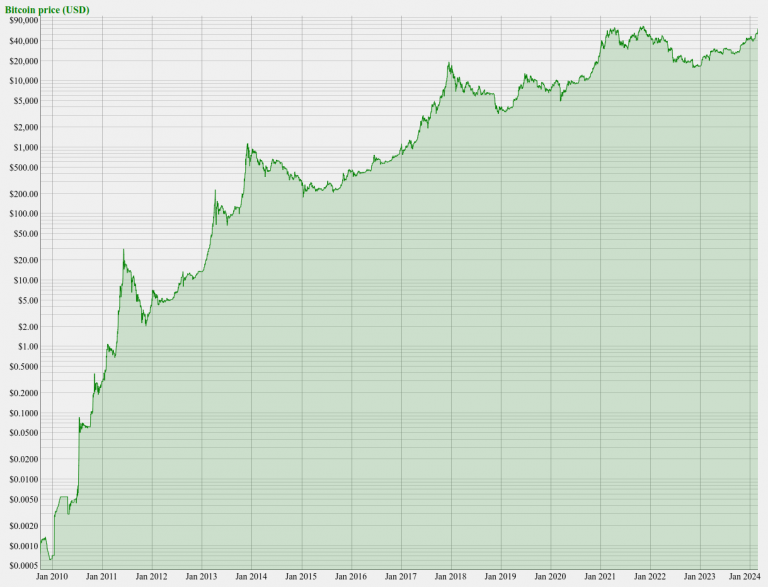
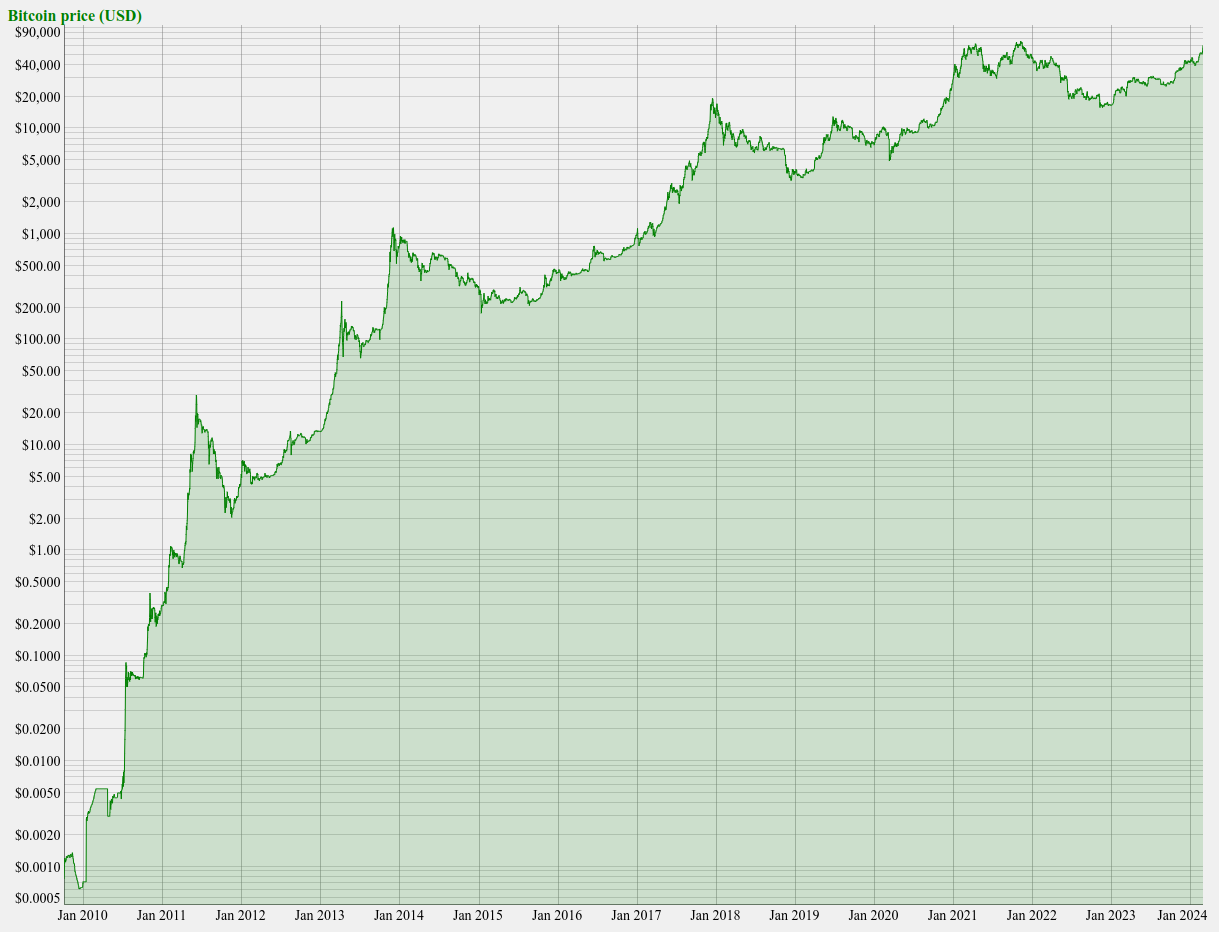
The bitcoin value chart serves as a crucial tool for anyone looking to navigate the world of cryptocurrency. It not only reflects the historical performance of Bitcoin but also provides insights into its current market dynamics. By understanding this chart, investors can make informed decisions based on price fluctuations, trading volume, and various other metrics that influence Bitcoin’s value.
From line graphs to candlestick displays, each type of chart offers a unique perspective on Bitcoin’s market behavior, allowing traders to interpret trends and anticipate future movements. With a decade’s worth of price data and the impact of key events, exploring the bitcoin value chart can be both enlightening and strategic for anyone interested in this digital currency.
Understanding Bitcoin Value Chart
A Bitcoin value chart serves as a visual representation of Bitcoin’s price movements over time, providing critical insights for traders and investors in the cryptocurrency market. By analyzing these charts, participants can make informed decisions based on historical trends, market sentiment, and price volatility.The significance of a Bitcoin value chart in cryptocurrency trading cannot be overstated. It helps traders identify patterns, gauge market momentum, and implement effective trading strategies.
By examining this chart, one can observe how Bitcoin’s price fluctuates in response to market events, regulatory changes, and investor sentiment.
Key Components of Bitcoin Value Chart
Several key components make up a Bitcoin value chart, each contributing to a comprehensive understanding of the market dynamics. These components include:
- Price: The price of Bitcoin is the most fundamental aspect illustrated on the chart, reflecting its market value at any given time. It is often displayed on the vertical axis.
- Volume: Trading volume indicates the total amount of Bitcoin that has been traded within a specific timeframe. It is a vital indicator of market activity and liquidity, generally represented by bars beneath the price chart.
- Time: The horizontal axis typically represents time, which can be adjusted to display various intervals such as minutes, hours, days, or even weeks. This aspect allows traders to observe both short-term and long-term trends.
Types of Bitcoin Value Charts
Different types of Bitcoin value charts serve various analytical purposes, allowing traders to choose the most suitable option based on their strategies. The most common types include:
- Line Charts: These charts display Bitcoin’s closing prices over a defined period, connecting the dots to create a simple and clear visual trend. They are beneficial for observing overall price direction without the clutter of additional data.
- Candlestick Charts: Candlestick charts provide detailed information about price movements within specific time frames, showcasing the open, high, low, and close prices. Each candlestick represents a time period, with bullish (green) and bearish (red) indicators, allowing traders to assess market sentiment effectively.
- Bar Charts: Similar to candlestick charts, bar charts provide the same price data but use vertical bars to represent the open, high, low, and close prices. While less visually intuitive than candlesticks, they still offer valuable insights into price dynamics.
“Understanding the various components and types of Bitcoin value charts is essential for making informed trading decisions in the ever-volatile cryptocurrency market.”
Historical Trends of Bitcoin Value
The value of Bitcoin has seen remarkable fluctuations over the past decade, driven by a variety of factors including market demand, regulatory changes, and technological advancements. Understanding these historical trends is crucial for anyone looking to grasp the dynamics of this cryptocurrency.The past ten years have been characterized by significant volatility and rapid growth in Bitcoin’s price. Initially launched in 2009, Bitcoin’s early years were marked by low trading volumes and minimal public awareness.
However, as more users adopted Bitcoin and as its underlying technology gained recognition, its value began to rise dramatically. Major events, such as regulatory announcements, technological upgrades, and macroeconomic factors, have also played critical roles in shaping Bitcoin’s market trajectory.
Significant Price Movements and Influencing Events
Several key events have significantly impacted Bitcoin’s value, leading to notable price movements. A comprehensive understanding of these events offers insight into the cryptocurrency’s market behavior. Below is a timeline showcasing important milestones in Bitcoin’s history along with corresponding value changes.
| Year |
Event |
Bitcoin Value (Approx.) |
| 2010 |
First recorded Bitcoin transaction for real-world goods (10,000 BTC for two pizzas) |
$0.0025 |
| 2013 |
Bitcoin reaches $1,000 for the first time |
$1,000 |
| 2017 |
Bitcoin’s value surges to nearly $20,000, attracting massive media attention |
$19,783 |
| 2018 |
Major market correction follows, Bitcoin drops to around $3,200 |
$3,194 |
| 2020 |
Institutional interest grows; Bitcoin reaches $20,000 again |
$20,000 |
| 2021 |
Bitcoin hits an all-time high of approximately $64,000 |
$64,000 |
| 2022 |
Global economic uncertainty leads to another downturn; Bitcoin falls below $20,000 |
$19,000 |
Throughout this decade, several other factors have contributed to Bitcoin’s price fluctuations, such as changes in investor sentiment, competitive cryptocurrencies, and broader economic conditions.
“The cryptocurrency market remains highly speculative and influenced by diverse factors that can drastically alter the landscape overnight.”
This timeline and the events associated with it showcase how Bitcoin’s value has been a reflection of both investor behavior and external market influences. By analyzing these trends, one can gain valuable insights into potential future movements of Bitcoin’s value.
Factors Affecting Bitcoin Value
Bitcoin’s value is influenced by a myriad of factors, both internal and external. Understanding these elements is crucial for anyone looking to navigate the volatile landscape of cryptocurrency investing. This section delves into the key factors that shape Bitcoin’s price, from market dynamics to psychological influences.
External Influences on Bitcoin Value
Several external factors significantly impact Bitcoin’s market value. These include market demand, regulatory developments, and technological advancements.
Market Demand
The demand for Bitcoin directly correlates with its price. When more people want to buy Bitcoin than sell it, the price tends to rise. Conversely, if more individuals wish to sell, the price can drop. Events that trigger increased demand can include mainstream adoption by businesses, media coverage, and the introduction of Bitcoin-related financial products.
Regulation
Government policies and regulations can have profound effects on Bitcoin’s value. Positive regulatory frameworks tend to boost confidence and market participation, while stringent regulations can lead to uncertainty and price drops. For instance, announcements from countries regarding the legality of Bitcoin can cause immediate market reactions.
Technological Advancements
Innovations within the Bitcoin network, such as improvements in scalability and security, can enhance its value. Technologies like the Lightning Network aim to make transactions faster and cheaper, attracting more users and investors.
Investor Sentiment and Market Psychology
Investor sentiment plays a pivotal role in shaping Bitcoin’s price movements. Market psychology often leads to fluctuations based on emotional reactions rather than fundamental value.
FOMO (Fear of Missing Out)
This phenomenon can drive prices higher as investors rush to buy Bitcoin during price surges, fearing they will miss out on potential profits.
Panic Selling
Conversely, negative news or market downturns can trigger panic selling, leading to steep price declines. This reaction is often driven by emotions rather than logical analysis of Bitcoin’s long-term potential.Market sentiment can shift rapidly, and as Bitcoin is still relatively young compared to traditional assets, its price tends to be more susceptible to these emotional swings.
Comparison of Factors Impacting Bitcoin Value Against Traditional Assets
Understanding how Bitcoin’s influencing factors compare to those of traditional asset classes can provide deeper insights into its market behavior. Below is a comparison of some key factors:
Market Demand
*Bitcoin*
Highly influenced by speculative trading and new technological adoption.
*Traditional Assets*
Often driven by company performance, economic indicators, and geopolitical events.
Regulation
*Bitcoin*
Subject to fluctuating regulatory landscapes across different jurisdictions, impacting its global adoption.
*Traditional Assets*
Generally regulated with established frameworks, though regulatory changes can still impact stock and bond markets.
Technological Advancements
*Bitcoin*
Innovations such as blockchain improvements can lead to rapid changes in value.
*Traditional Assets*
Technological changes can impact industries but do not directly alter the asset’s intrinsic value.
Investor Sentiment
*Bitcoin*
High volatility driven by psychological factors can lead to dramatic price swings.
*Traditional Assets*
Sentiment impacts stock markets too, but typically with less volatility due to established market mechanisms.
“Understanding the factors affecting Bitcoin’s value is essential for making informed investment decisions.”
Analyzing Current Bitcoin Value Trends
The analysis of current Bitcoin value trends provides essential insights into the cryptocurrency’s market behavior. Understanding these trends not only helps investors make informed decisions but also sheds light on the overall sentiment within the crypto market. By examining the present conditions as reflected in the Bitcoin value chart, one can identify critical patterns and indicators that influence pricing.The current market conditions for Bitcoin are characterized by a volatile environment influenced by various economic factors, regulatory news, and technological developments.
The Bitcoin value chart serves as a visual representation of these fluctuations, allowing analysts and traders to interpret the relationships between price changes and market events.
Tools and Techniques for Interpreting Bitcoin Value Trends
Several tools and techniques are instrumental in analyzing Bitcoin value trends effectively. Utilizing these methods can enhance understanding and provide a clearer picture of market dynamics. The following are some of the most commonly used techniques:
1. Moving Averages
This technique smooths out price data over a specific period, allowing traders to identify trends more easily. The two primary types are the Simple Moving Average (SMA) and the Exponential Moving Average (EMA).
The SMA calculates the average price over a defined number of periods, while the EMA gives greater weight to more recent prices, making it more responsive to new information.
For instance, a 50-day EMA can serve as support or resistance, indicating potential entry or exit points.
2. Relative Strength Index (RSI)
The RSI is a momentum oscillator that measures the speed and change of price movements. It ranges from 0 to 100 and is typically used to identify overbought or oversold conditions. An RSI above 70 indicates an overbought condition, suggesting a potential price correction, while an RSI below 30 indicates oversold conditions, possibly signaling a price rebound.
3. Candlestick Patterns
Analyzing candlestick patterns can provide insights into market sentiment. Patterns such as Doji, Hammer, and Engulfing can indicate potential reversals or continuations in the trend.
4. Volume Analysis
Examining trading volume is crucial for understanding the strength of a price movement. An increase in volume during a price rise suggests stronger momentum, while low volume during a decrease may indicate a lack of conviction in the downward move.
Step-by-Step Guide to Reading a Bitcoin Value Chart
Reading a Bitcoin value chart effectively requires familiarity with its components and the ability to interpret key indicators. Here’s a step-by-step guide on how to do it:
Step 1
Identify the Time Frame : Select the appropriate time frame for your analysis—be it minutes, hours, days, or weeks. Shorter time frames cater to day traders, while longer periods suit investors focused on trends.
Step 2
Analyze Price Movements : Observe the price movements and identify trends. Look for higher highs and higher lows in an uptrend, and lower highs and lower lows in a downtrend.
Step 3
Apply Moving Averages : Add moving averages to the chart to help smooth out price fluctuations. Look for crossovers between short-term and long-term moving averages, which can indicate bullish or bearish signals.
Step 4
Utilize RSI : Incorporate the RSI to assess whether Bitcoin is in an overbought or oversold state. This can guide entry and exit decisions.
Step 5
Examine Volume : Pay attention to the volume accompanying price movements. High volume on price increases indicates strong buying interest, while high volume on price drops may indicate selling pressure.
Step 6
Look for Patterns : Identify any candlestick patterns that may suggest potential reversals or continuations. Familiarize yourself with common patterns to enhance your predictive capabilities.By utilizing these tools and following this guide, traders and investors can improve their ability to read Bitcoin value charts and make more informed decisions in the ever-evolving cryptocurrency market.
Future Projections for Bitcoin Value
As the cryptocurrency landscape evolves, forecasting Bitcoin’s future value becomes increasingly complex yet vital for investors and enthusiasts alike. By analyzing historical data and current market trends, various methodologies can be employed to predict where Bitcoin might be heading. This segment explores these methodologies while considering the influence of technological advancements on its value.
Methodologies for Forecasting Bitcoin’s Future Value
Understanding potential future price movements of Bitcoin requires a combination of quantitative and qualitative analysis. Various forecasting methods leverage historical price data along with current market conditions.One prevalent methodology is technical analysis, which involves studying price charts and historical patterns to predict future movements. Traders often use indicators such as Moving Averages, RSI (Relative Strength Index), and Fibonacci retracements to identify entry and exit points.
Another approach is fundamental analysis, which looks at external factors such as market demand, regulatory news, and macroeconomic indicators affecting Bitcoin.Additionally, machine learning algorithms have gained traction in predicting Bitcoin prices by analyzing vast datasets. These algorithms can identify patterns that human analysts may overlook, providing a more dynamic approach to forecasting.
Technological Innovations Impacting Bitcoin Value
Technological advancements play a crucial role in influencing Bitcoin’s value. One significant innovation is the Lightning Network, which aims to enhance Bitcoin’s scalability and transaction speed. This layer-2 solution allows for faster transactions by enabling off-chain processing, facilitating microtransactions that were previously impractical due to high fees and slow confirmation times.The implementation of the Lightning Network can lead to increased adoption of Bitcoin for everyday transactions, which in turn may drive up demand and, consequently, its value.
The ability to conduct instant, low-cost transactions makes Bitcoin more appealing as a medium of exchange, potentially broadening its usage beyond just a store of value.
Hypothetical Future Bitcoin Values Based on Market Conditions
To illustrate potential future Bitcoin values, we can design a hypothetical scenario considering various market conditions. The table below presents potential price projections based on bullish, bearish, and stable market conditions.
| Market Condition |
Projected Bitcoin Value (USD) |
| Bullish Market (Increased Adoption) |
$150,000 |
| Stable Market (Current Trends Continue) |
$50,000 |
| Bearish Market (Regulatory Crackdown) |
$15,000 |
This hypothetical scenario demonstrates how varying factors such as market sentiment, regulatory landscapes, and technological advancements could dramatically affect Bitcoin’s future valuation. By understanding these elements, investors can make more informed decisions regarding their cryptocurrency portfolios.
Practical Applications of Bitcoin Value Charts
Understanding and utilizing Bitcoin value charts can be incredibly beneficial for both traders and investors. These charts provide a visual representation of Bitcoin’s price movements, making it easier to identify trends, support and resistance levels, and potential entry or exit points for trades. By leveraging this information effectively, individuals can make more informed decisions regarding their investments in Bitcoin.Bitcoin value charts are not just numbers; they reflect real-time market sentiment and can guide traders in formulating their strategies.
Understanding chart patterns and incorporating various technical indicators can significantly enhance trading outcomes. Traders can spot trends that suggest buying or selling opportunities, while investors might use them to assess long-term potential based on historical performance.
Utilizing Chart Patterns and Technical Indicators
Chart patterns and technical indicators play a crucial role in developing effective trading strategies for Bitcoin. Recognizing these patterns can signal potential price movements, allowing traders to position themselves accordingly. Key patterns to watch include:
- Head and Shoulders: This pattern often indicates a reversal in trend, signaling a potential sell opportunity after an upward movement.
- Double Top and Double Bottom: These formations suggest price reversals. A double top signals a potential downturn, while a double bottom indicates a possible upward trend.
- Triangles: Ascending, descending, and symmetrical triangles can indicate continuation or reversal, depending on the breakout direction.
In addition to chart patterns, technical indicators serve as valuable tools for traders. Some commonly used indicators include:
- Moving Averages: These smooth out price data to identify trends over a specific period, helping traders determine potential buy or sell signals.
- Relative Strength Index (RSI): This momentum oscillator measures the speed and change of price movements, indicating overbought or oversold conditions.
- Bollinger Bands: These bands provide a visual representation of volatility and can help identify potential price breakouts or reversals.
To leverage these tools effectively, it is essential to combine multiple indicators and patterns to confirm trading signals. For instance, if a trader identifies a double bottom pattern alongside an RSI reading indicating oversold conditions, this may strengthen the case for entering a long position.
Resources and Tools for Tracking Bitcoin Value Charts
Access to reliable resources and tools is vital for tracking Bitcoin value charts effectively. A variety of platforms and applications can help traders and investors stay informed about market movements. Useful resources include:
- TradingView: This platform offers advanced charting tools, community-generated ideas, and a wide range of technical indicators to analyze Bitcoin’s performance.
- CoinMarketCap: Known for tracking cryptocurrency prices, it provides historical data, market capitalization, and interactive charts for Bitcoin and other cryptocurrencies.
- CryptoCompare: This resource provides comprehensive market data and analytics tools, including price charts, trading volume, and market sentiment analysis.
- Binance: As one of the largest cryptocurrency exchanges, Binance offers robust charting features along with trading tools, making it a go-to resource for active traders.
Utilizing these tools effectively allows traders to remain updated on Bitcoin’s value movements and make strategic decisions based on real-time data. Keeping an eye on multiple sources of information and employing effective charting techniques can significantly enhance one’s trading strategy and investment outcomes.
Concluding Remarks
In summary, the bitcoin value chart is more than just a collection of numbers; it is a window into the ever-evolving landscape of cryptocurrency trading. By analyzing historical trends, current market conditions, and future projections, traders can better position themselves in this volatile market. Whether you are a seasoned investor or a newcomer, understanding how to read and utilize the bitcoin value chart can enhance your trading strategies and decision-making process.
Essential FAQs
What is a Bitcoin value chart?
A Bitcoin value chart visually represents the price fluctuations of Bitcoin over time, helping traders analyze trends and make informed decisions.
How do I read a Bitcoin value chart?
To read a Bitcoin value chart, look for key components like price movements, trading volume, and time intervals, and use tools like moving averages for analysis.
What are the different types of Bitcoin value charts?
The main types of Bitcoin value charts include line charts, candlestick charts, and bar charts, each offering a different way to visualize price movements.
Why is understanding the Bitcoin value chart important?
Understanding the Bitcoin value chart is crucial for making informed trading decisions, identifying trends, and assessing market sentiment.
What external factors influence Bitcoin value?
Bitcoin value can be influenced by factors such as market demand, regulatory news, technological advancements, and overall investor sentiment.